If you’ve ever shopped for aftermarket wheels, you’ve probably come across terms like offset and backspacing. While they’re often used interchangeably, they’re actually two different measurements that work together to determine how a wheel sits on your vehicle.
Understanding the difference is important because these measurements affect everything from your vehicle’s appearance to suspension clearance, steering geometry, and tire fitment.
Let’s break it down.
What Is Wheel Offset?
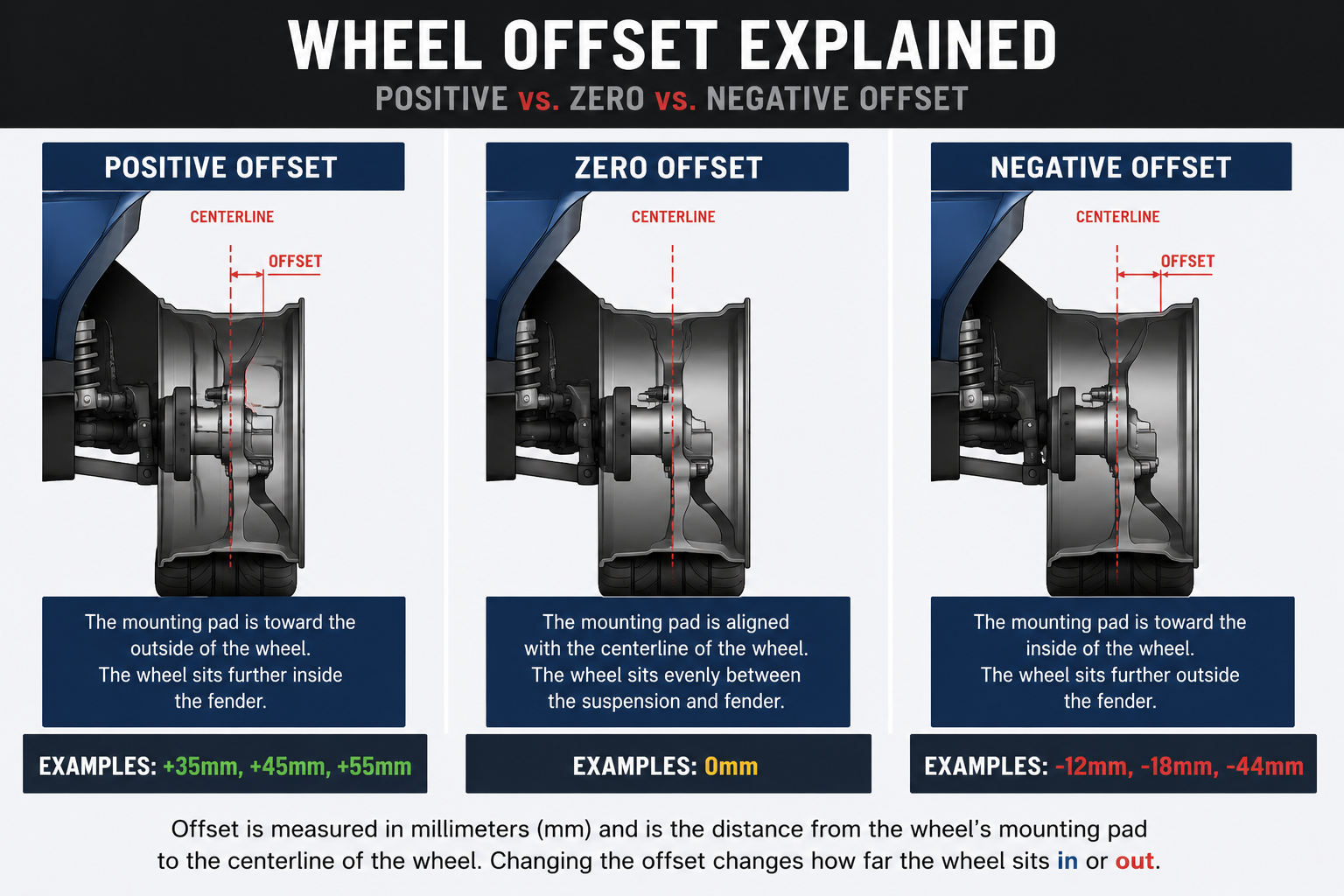
Wheel offset is the distance between the wheel’s mounting pad and its centerline.
Simply put, offset determines whether the wheel sits farther inside or farther outside of the wheel well.
Offset is measured in millimeters and is available in three different types.
Positive Offset
A positive offset means the mounting pad is positioned toward the outside face of the wheel.
The higher the positive number, the farther the wheel sits inward toward the suspension.
Most modern passenger cars, crossovers, and SUVs use positive offset wheels from the factory.
Examples:
- +35 mm
- +45 mm
- +55 mm
Zero Offset
A zero offset wheel places the mounting surface directly on the wheel’s centerline.
This positions the wheel evenly between the suspension and the outside of the vehicle.
Negative Offset
A negative offset moves the mounting pad toward the back side of the wheel.
This pushes the wheel farther outward, creating a wider stance and deeper lip.
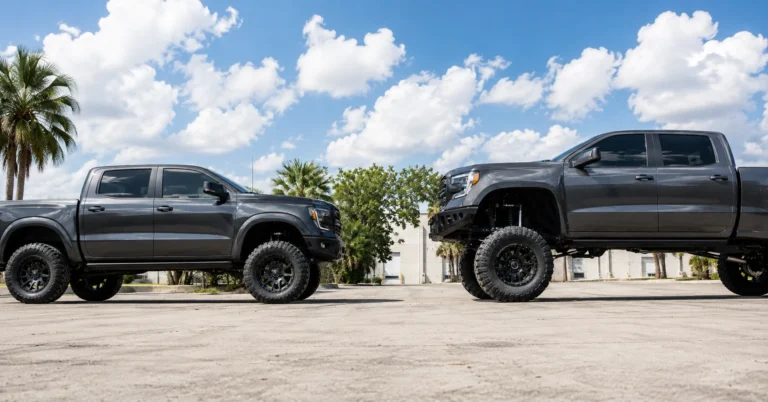
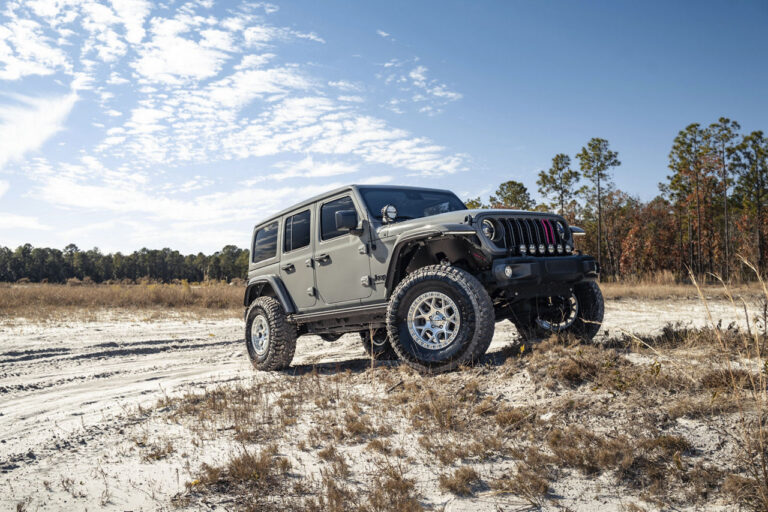
Negative offsets are commonly found on lifted trucks, Jeeps, and aggressive off-road builds.
Examples:
- -12 mm
- -18 mm
- -44 mm
What Is Backspacing?
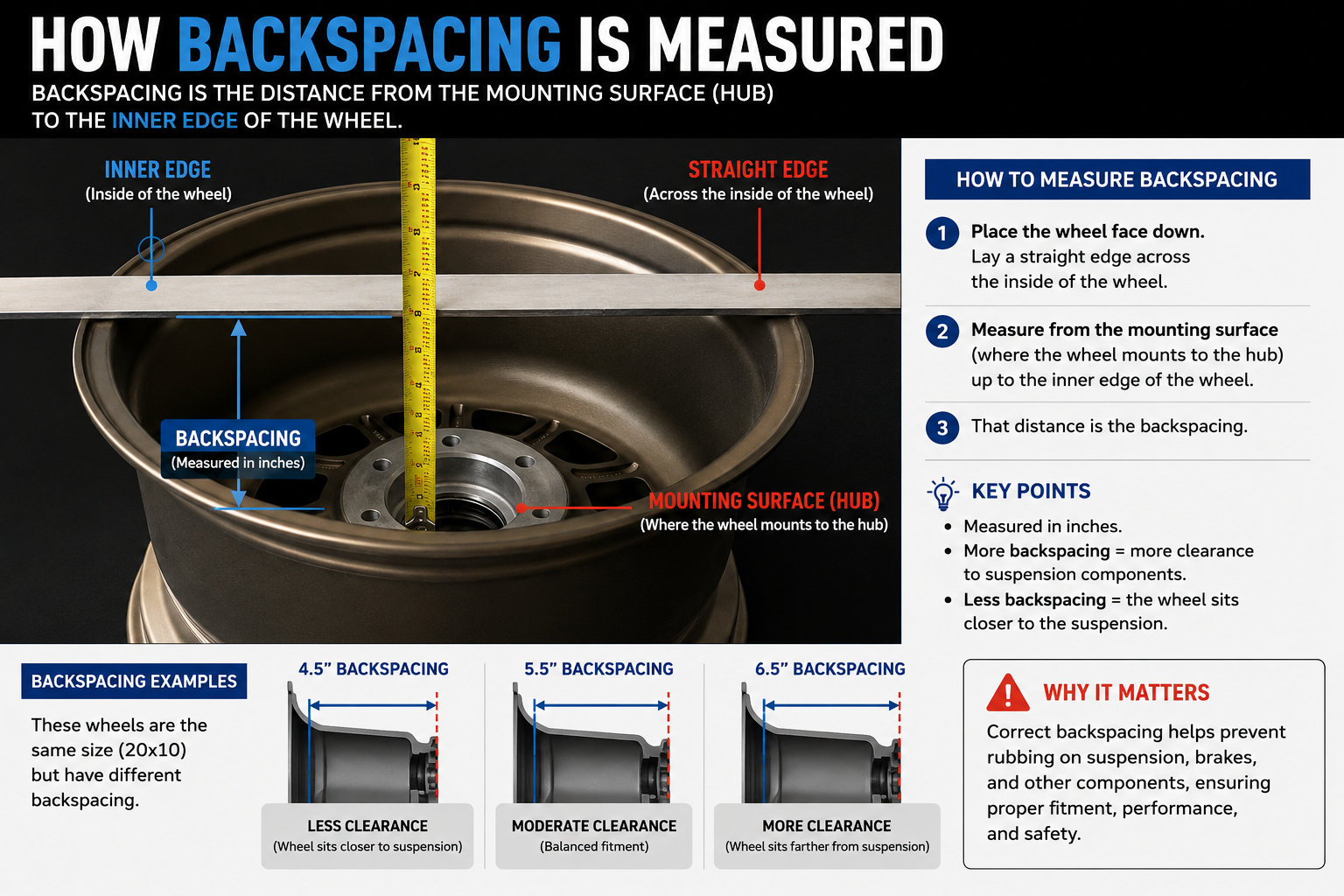
Backspacing measures the distance from the wheel’s mounting pad to the inner edge of the wheel.
Unlike offset, backspacing is measured in inches.
While offset tells you where the mounting surface is located relative to the wheel’s centerline, backspacing tells you exactly how much of the wheel extends inward toward the suspension.
This measurement becomes especially important when checking clearance for:
- Upper control arms
- Coilovers
- Brake components
- Leaf springs
- Inner fenders
Why Do Offset and Backspacing Matter?
Changing either measurement changes where the wheel sits on the vehicle.
Too much positive offset may cause the wheel or tire to contact suspension components.
Too much negative offset can push the tire outside the fender, increase steering scrub radius, and create rubbing issues during turns or suspension travel.
The right combination provides:
- Proper suspension clearance
- Adequate brake clearance
- Correct fender positioning
- Improved appearance
- Safe steering geometry
That’s why choosing wheels isn’t simply about diameter and width.
Offset and Backspacing Are Connected
Although they’re different measurements, offset and backspacing always change together.
For example, two 20×10 wheels can have completely different fitments.
A 20×10 +18 wheel will sit farther inward than a 20×10 -18 wheel because its mounting pad is located closer to the outside face.
Likewise, the backspacing will also be different even though both wheels share the exact same diameter and width.
The wheel width stays the same.
Only the mounting location changes.
Which Measurement Should You Use?
Today, nearly every aftermarket wheel manufacturer lists offset because it’s the industry standard.
Backspacing is still commonly referenced in the truck and off-road world, especially when discussing suspension clearance or comparing older wheel fitment specifications.
Knowing both measurements allows experienced installers to predict exactly how a wheel will fit before it’s ever mounted.
Why Proper Fitment Matters
Choosing the wrong offset can create more than cosmetic issues.
Incorrect wheel fitment can lead to rubbing, poor handling characteristics, premature suspension wear, and unnecessary stress on wheel bearings.
Every vehicle has unique fitment requirements based on suspension design, brake size, tire dimensions, and intended use.
That’s why proper wheel selection should always be based on complete vehicle specifications rather than simply copying another build.
Let Fitment Dynamics Take the Guesswork Out of Wheel Fitment
At Fitment Dynamics, fitment isn’t an afterthought. It’s what we do every day.
Whether you’re building a lowered sports car, a lifted truck, or simply replacing your factory wheels, our team will help you choose the correct offset, width, and tire combination for your vehicle and your goals.
Our goal is simple. Deliver a setup that looks right, performs properly, and fits exactly as intended.
Shop Wheels at Fitment Dynamics
You can visit our Miami showroom, where our team can walk you through wheel styles, offsets, and complete wheel and tire packages tailored to your vehicle.
Not local? No problem.
You can also shop online through Fitment Dynamics and have your wheels shipped directly to your doorstep, safely packaged and ready for installation.
Whether you are upgrading your daily driver or finishing a full build, we make it easy to get the right setup, the right way.
Visit us in Miami or shop online today and take your build to the next level.